
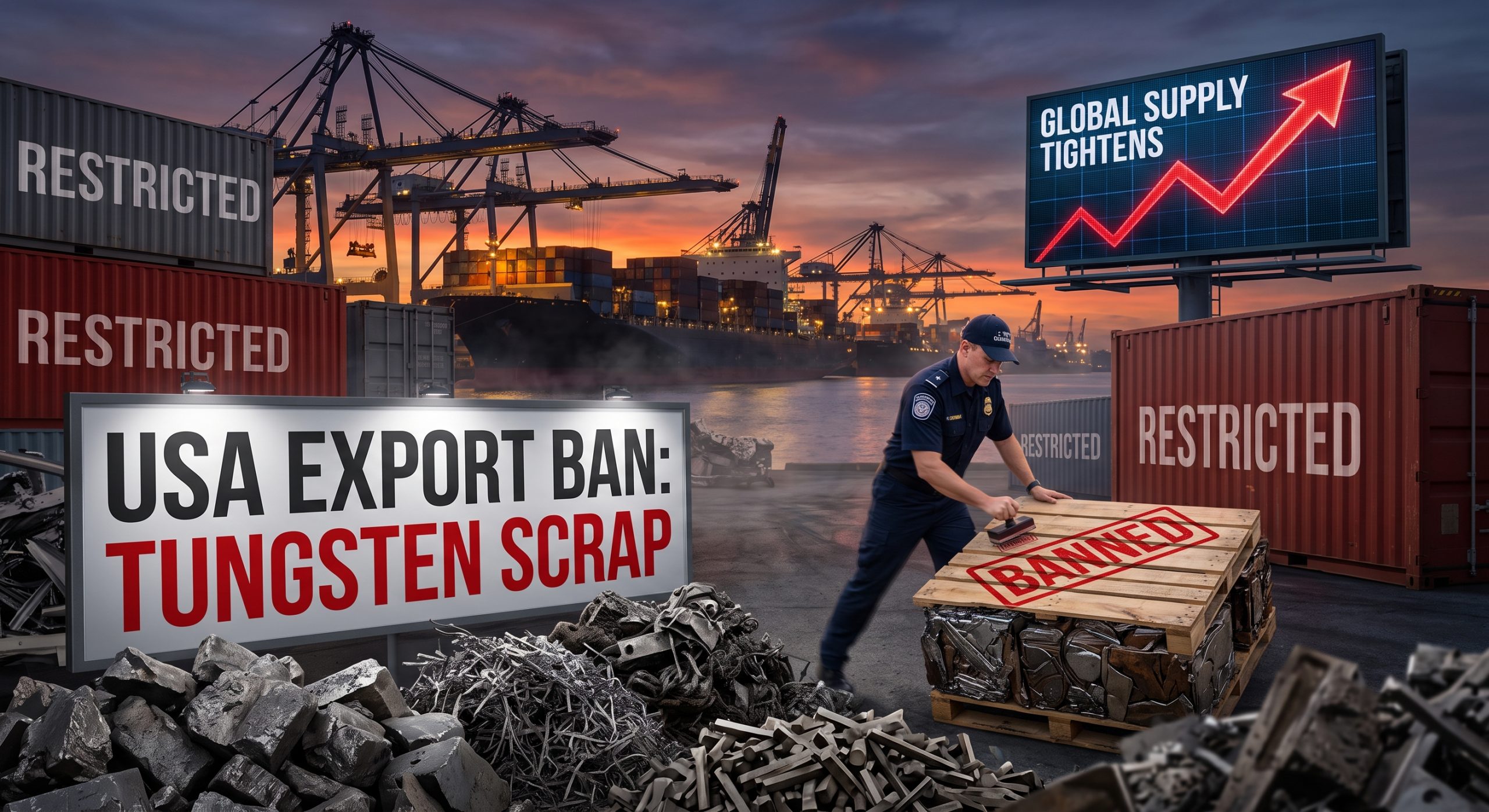
Tungsten Supply Crisis: What the US Export Ban Means for Haptics and Vibration Motors
August 27, 2026The global supply chain is facing a new chokepoint, and this one directly impacts the materials that bring our everyday electronics to life. A recent report from ZeroHedge highlights a significant geopolitical shift: the US government has officially enacted a strict export ban on tungsten scrap and shredded battery material, which took effect 27, August 2026.
As geopolitical tensions rise and countries rush to secure critical minerals, this development is sending ripples through multiple industries, including the haptics and micro-motor sector. Here is a breakdown of what this news means, why tungsten is so crucial to Vybronics, and how it impacts the future of Linear Resonant Actuators (LRAs) and vibration motors.
The US Tungsten Export Ban: A Brief Overview
According to the recent ZeroHedge article, the US Commerce Department directive prohibits the export of tungsten scrap and “black mass” (the shredded remains of lithium-ion batteries) for one year in an effort to retain critical supplies domestically. This move is a direct response to a looming global tungsten supply crisis.
Currently, the United States has virtually zero domestic mined tungsten production, relying on imports for roughly half of its tungsten consumption based on 2024 data. With China historically controlling nearly 79% of global output (producing 67,000 tons in 2025) and recently imposing its own export controls on selected tungsten products, the global market has seen Rotterdam prices surge nearly 800%. While Wall Street often views tungsten purely through a defense or semiconductor lens, the reality is that tungsten is an irreplaceable building block for consumer electronics and Vybronics haptic feedback devices.
Why Vybronics Haptic Devices Rely on Tungsten
If you are designing a smartphone, a medical wearable, or a VR controller, real estate is your most precious commodity. You need to deliver strong, crisp haptic feedback in a microscopic footprint. This is where tungsten becomes the unsung hero of the haptic industry.
Whether it is an Eccentric Rotating Mass (ERM) coin motor or a modern Linear Resonant Actuator (LRA), the core mechanic of a vibration motor relies on moving a mass to generate kinetic energy. The fundamental physics are simple: a heavier mass generates a stronger vibration force.
Tungsten is incredibly dense—roughly 19.3 grams per cubic centimeter, which is about 2.5 times denser than steel and nearly identical in density to gold. By using high-density tungsten alloys for the internal moving mass or the eccentric counterweight, engineers can maximize the inertial weight without increasing the physical dimensions of the motor.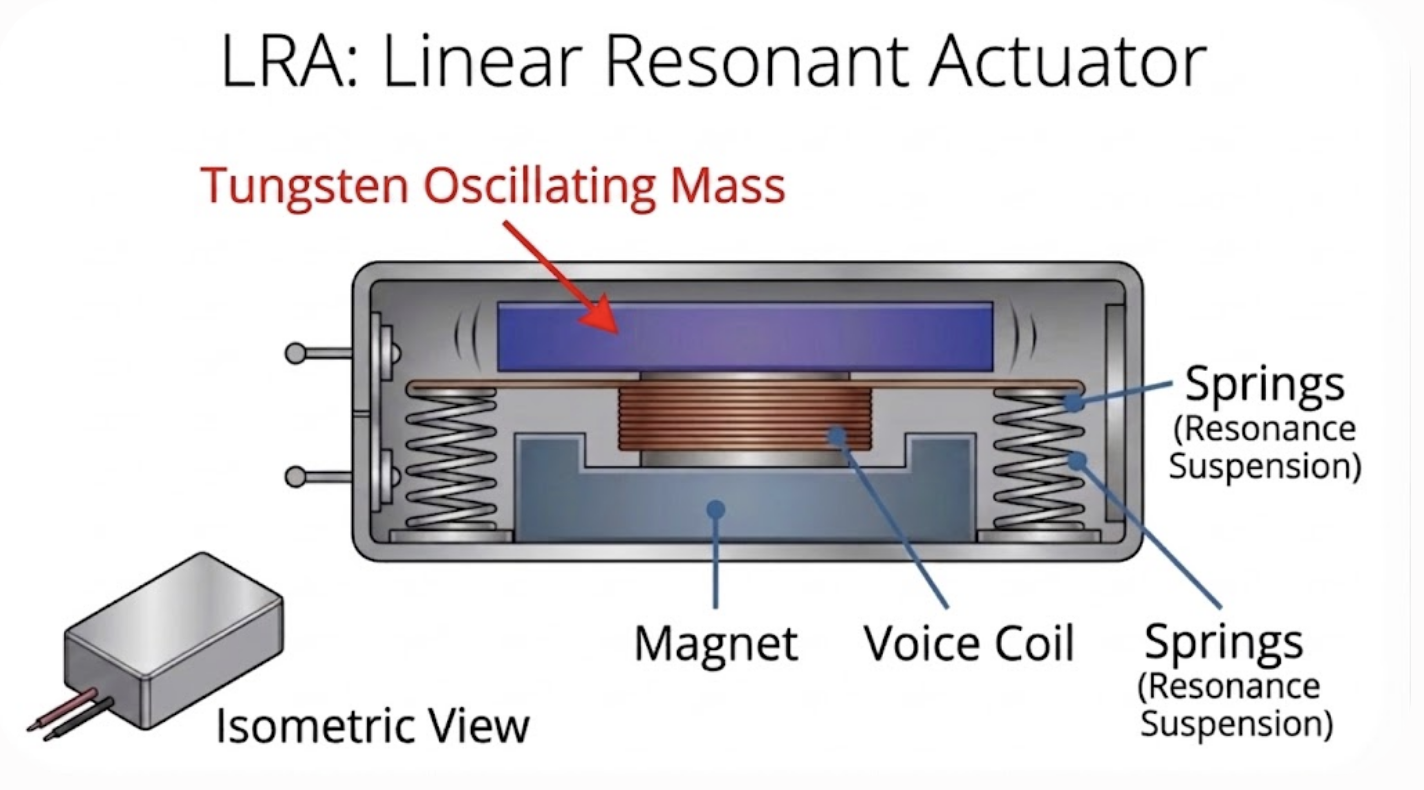
Without tungsten, manufacturers would be forced to use lighter metals like steel or brass. To achieve the same vibration intensity (G-force), the motor’s size would have to increase significantly, making ultra-thin smartphones and compact wearables impossible to design.
Supply Chain Resilience at Vybronics
The new export bans and the skyrocketing global prices of tungsten highlighted in the ZeroHedge report underscore a critical reality: supply chain resilience is no longer optional; it is a necessity.
At Vybronics, we understand that our customers rely on us to deliver high-quality LRAs and coin vibration motors on time, regardless of geopolitical turbulence. Here is how we are navigating the tungsten squeeze:
•Strategic Material Sourcing: We continuously evaluate and diversify our raw material supply chains to mitigate regional shortages and price volatility.
•Engineering Innovations: Our R&D teams are constantly optimizing motor designs to maximize haptic efficiency, ensuring we get the highest possible G-force output per gram of material used.
•Proactive Forecasting: We work closely with our partners to secure long-term forecasts, allowing us to lock in raw materials well ahead of market bottlenecks.
Moving Forward
The tungsten supply crisis is a reminder of how interconnected global commodities are with the devices we hold in our hands every day. While the US export ban on tungsten scrap aims to protect domestic interests, it signals a broader tightening of the critical minerals market.
At Vybronics, we remain committed to engineering the world’s most advanced haptic solutions while insulating our clients from upstream supply shocks. If you are developing a new product and have questions about how these market dynamics might affect your bill of materials, lead times, or haptic motor selection, our team is here to help.


